YourTribe · Candidate Onboarding
Cutting recruiter screening calls from 30+ minutes to under 10
Recruiters were spending screening calls collecting basic facts. I redesigned candidate onboarding to collect them upfront as structured data, which also made AI matching possible.
- My role
- Design lead. I ran the research, set the strategy, built on the design system, designed the core flow and wrote the UX copy. Two junior designers built variant screens from my direction.
- Team
- Me, 2 junior designers, 2–3 engineers
- Timeline
- 3 weeks
- Product
- Web and mobile web · candidate side of YourTribe, a hiring marketplace in India
- Results
- Screening calls over two-thirds shorter, across about 200 calls over 2 months · structured data that made AI matching possible
In short
- ProblemSignup collected little more than a résumé, so every promising candidate needed a 30-minute call that was mostly data collection.
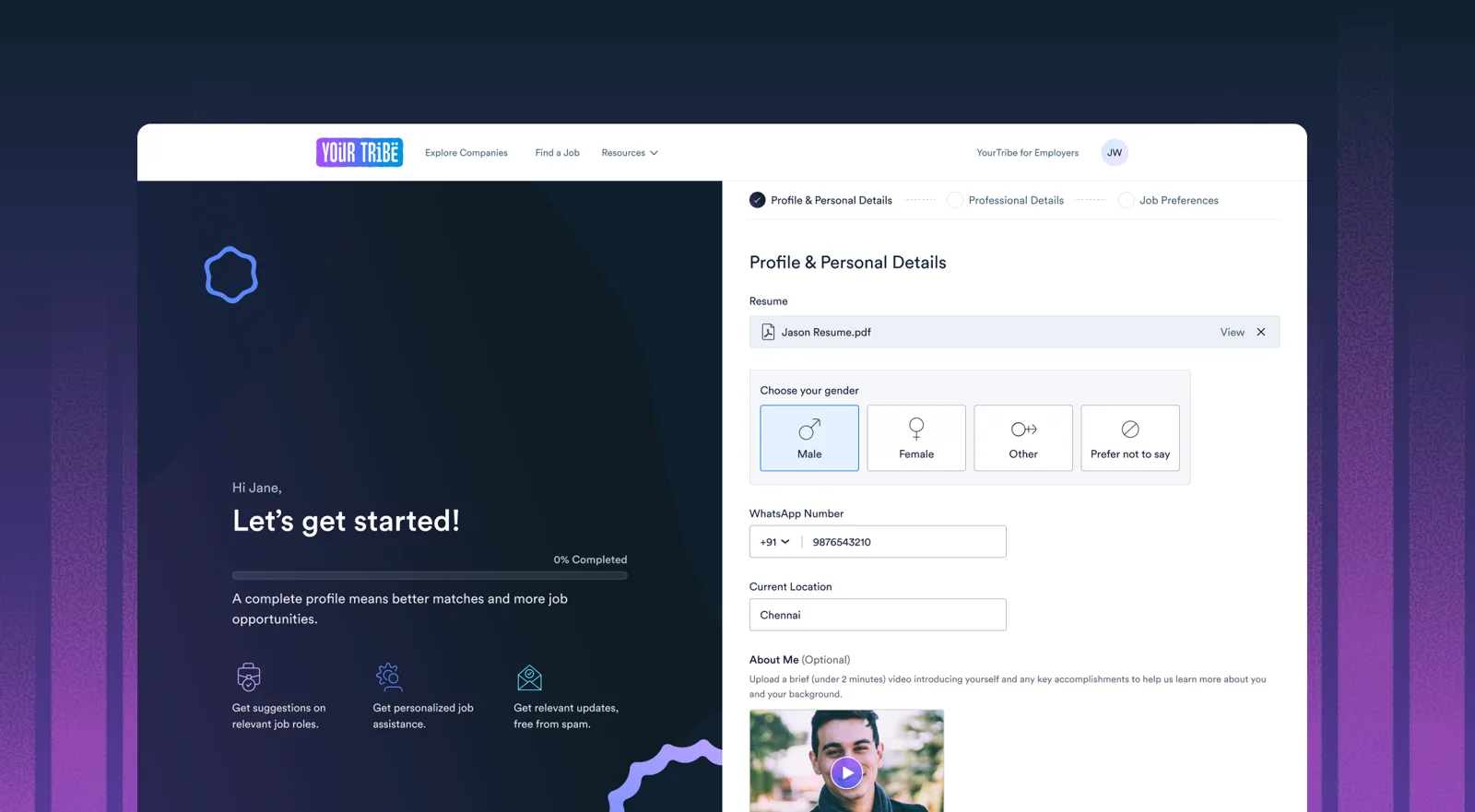
- What I didReframed signup as "complete your profile and we'll match you", then designed a three-stage flow that collects only what matching needs.
- ResultScreening calls dropped to under 10 minutes and focused on judging fit, not gathering facts. The structured data let us add AI matching.
The problem
We had a two-sided problem that was getting worse.
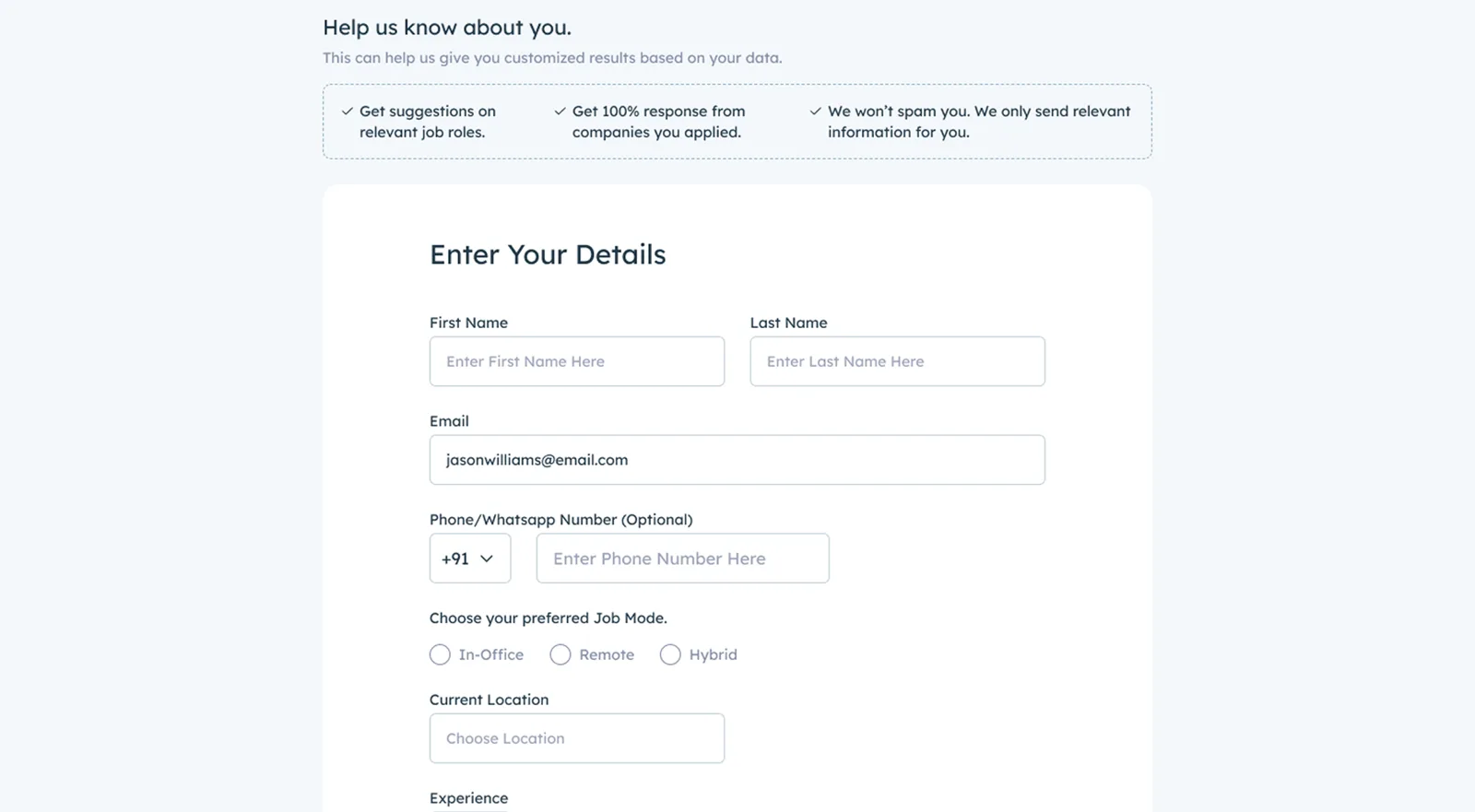
Recruiters were doing data entry. Signup asked for basic details and a résumé, nothing more. So every candidate with a match score above 60% needed a screening call of 30 minutes or more, and those calls were doing two jobs: collecting details we should have had already, and judging the candidate's motivation and fit. Most of the time went to the first job.
Candidates saw no reason to invest. To them we were just another job board, and a smaller one. With fewer listings than the big boards, they had little reason to fill in a detailed profile. Incomplete profiles meant weaker matches, fewer placements, and fewer founders posting jobs.
The insight
You can't ask people to put effort into a platform they see as transactional. But if the value changes, so does the effort they're willing to give. We changed the promise:
"Don't apply for jobs. Complete your profile, and we'll match you with the right opportunities, confirming with you before we apply on your behalf."
Now a detailed profile wasn't a chore. It was the candidate's advantage: the more we knew, the better we could advocate for them.
Key decisions
01Collect structured answers, not just a résumé
- Options
- Keep the short form and parse résumés automatically, or ask candidates for structured details directly.
- I chose
- Structured fields, with the résumé kept as a reference.
- Why
- Résumés vary wildly in format and say nothing about intent: whether someone is actively looking, how they want to work, or whether they'd relocate. Matching needed consistent data it could compare.
- Trade-off
- A longer signup risks more people dropping off, which shaped the next decision.
02Three short stages with visible progress
- Options
- One long form; ask for details gradually after signup; or a few short stages.
- I chose
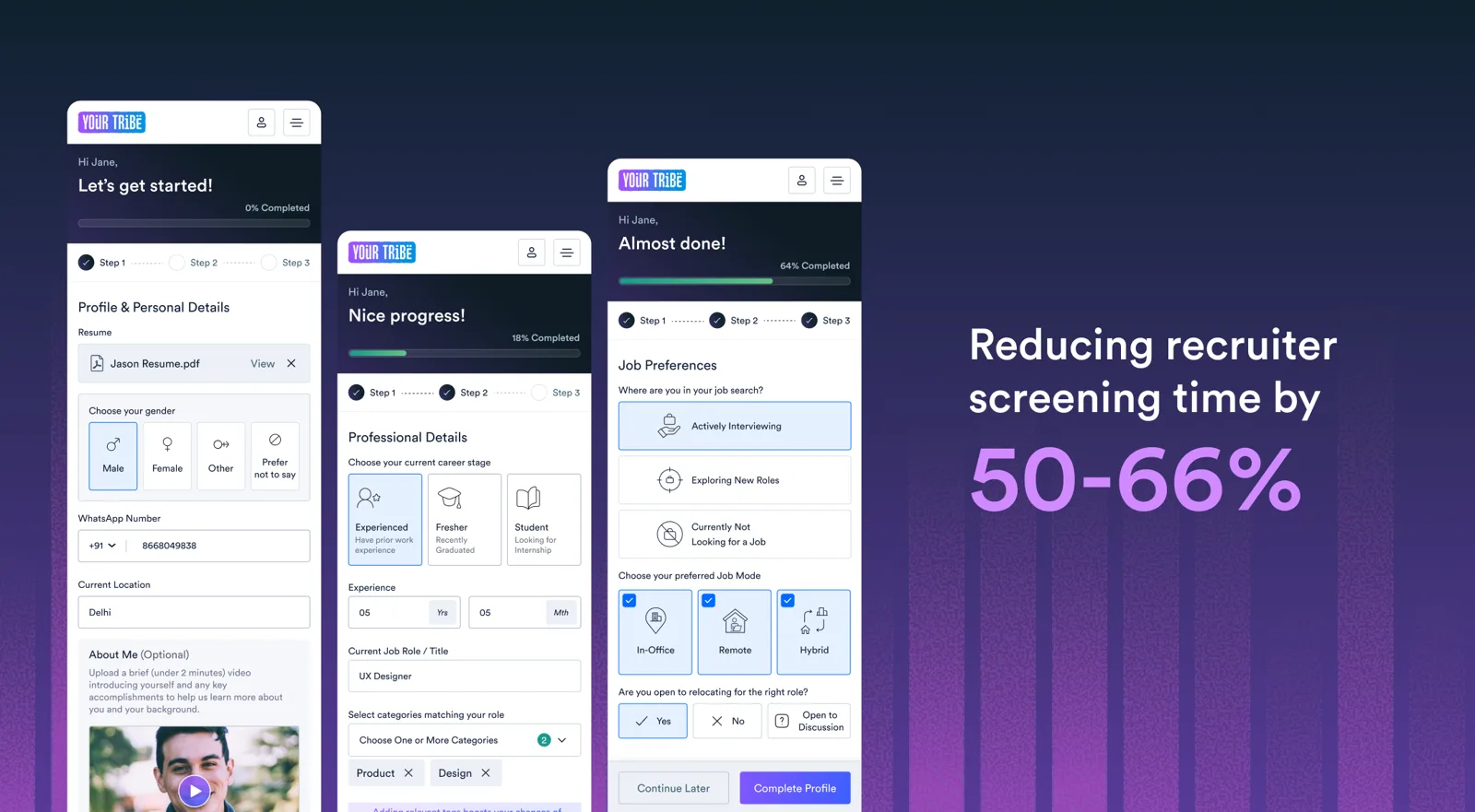
- Three stages (personal details, professional details, job preferences) with a progress bar, encouraging copy ("Nice progress!", "Almost done!") and a "Continue later" option always visible.
- Why
- Long forms kill completion. Short stages make progress feel real, and "Continue later" removes the pressure to finish in one sitting.
- Trade-off
- More screens and taps overall.
03Every field has to improve the match
- Options
- Ask for everything recruiters might want, or only what changes match quality.
- I chose
- Only fields that improved matching. I cut lengthy assessments, kept the video intro optional, and used expected pay as an input to matching rather than a hard filter.
- Why
- Each extra field costs completions. If a field didn't make matches better, it didn't earn its place.
- Trade-off
- Some signals recruiters value, like skills assessments, stayed out of signup.
04Design the data so AI matching could use it
- Options
- Free-text answers, or answers from consistent categories.
- I chose
- Consistent categories. Skills come from suggestions based on the chosen job category; work mode and job-search status are fixed options.
- Why
- The matching model could only score candidates against jobs if everyone described themselves the same way. Suggestions also reduced typing and kept the data clean.
- Trade-off
- Some unusual skills and job titles don't fit the categories neatly.
The solution
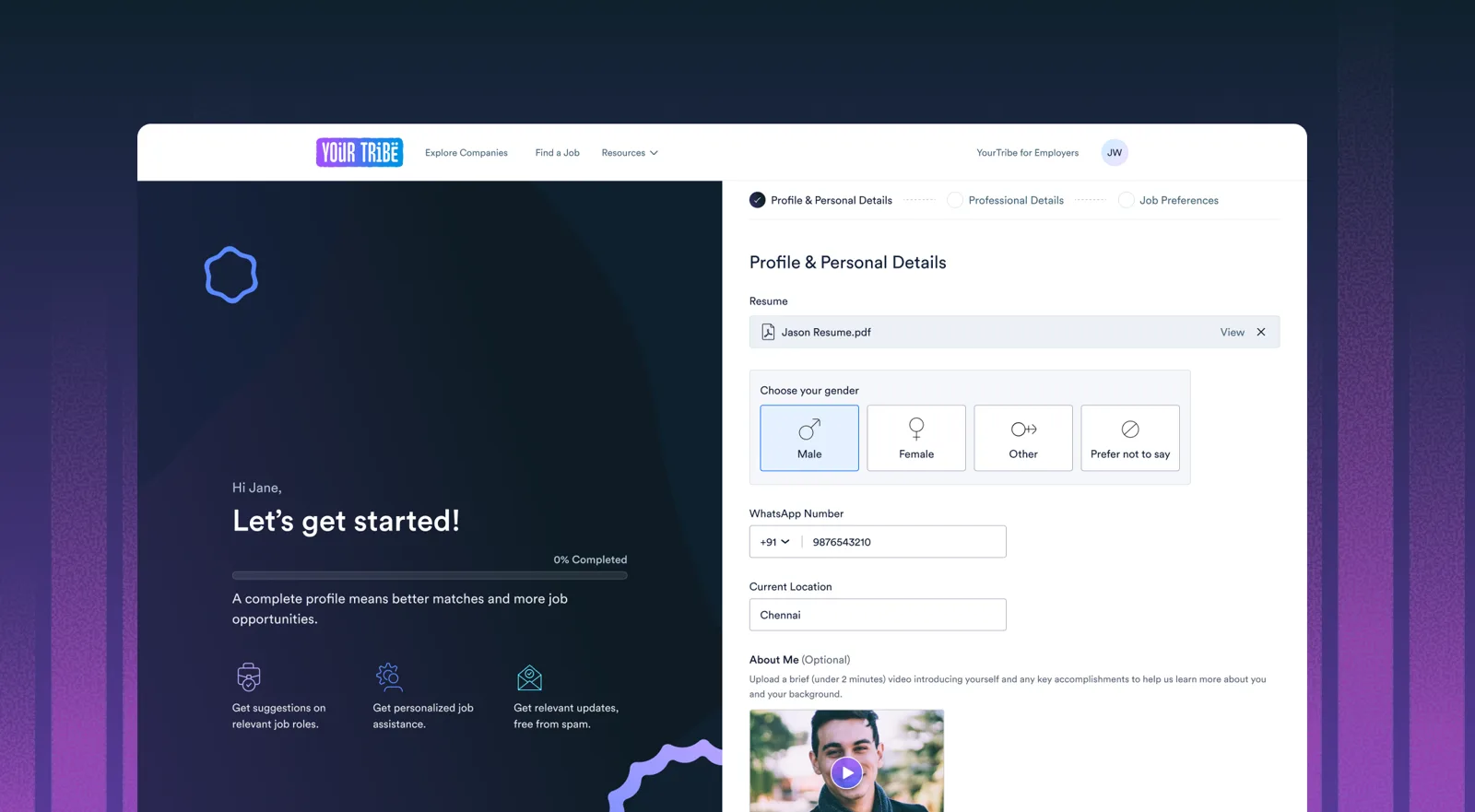
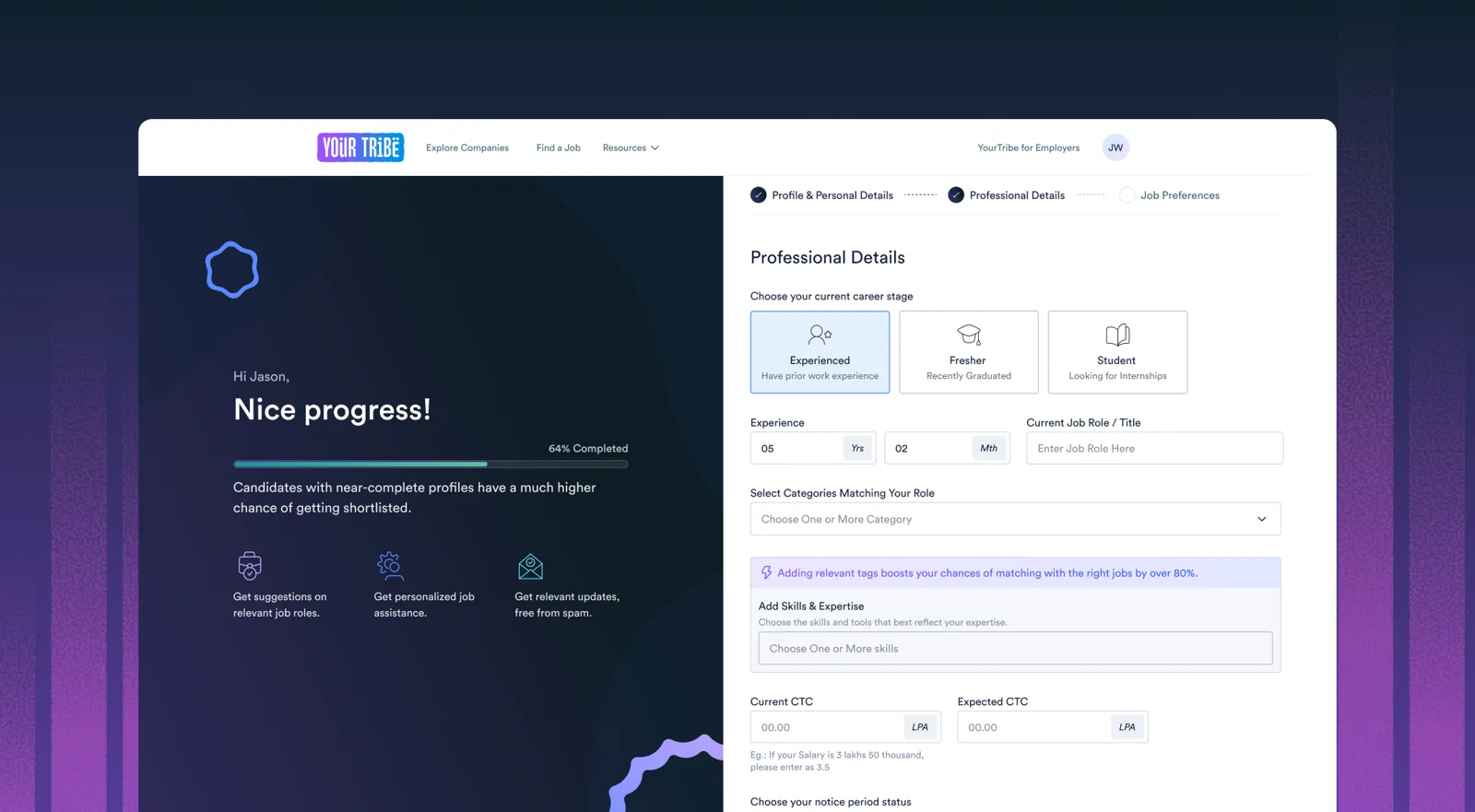
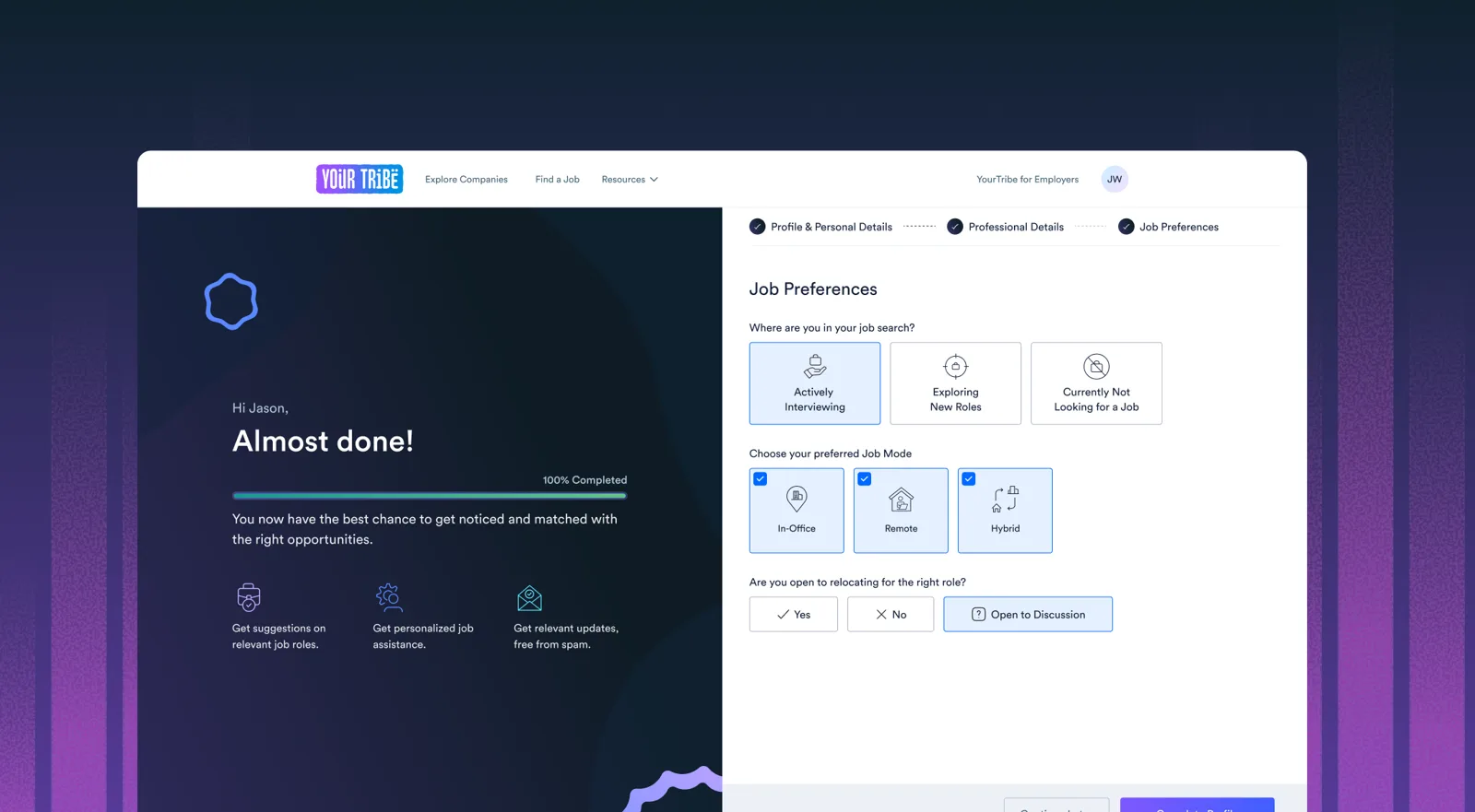
The flow follows Indian hiring norms. It asks for current salary, which is standard in India, and notice period, since employees there commonly give 30–90 days' notice. It uses WhatsApp because that's the default way people and businesses message in India.
For a US product I'd drop current salary, since many US states restrict asking about pay history, and ask for expected range only.
Results
| Measure | Before | After |
|---|---|---|
| Screening call length | 30+ minutes | Under 10 minutes |
| What the call covered | Collecting details and judging fit | Judging fit only |
| Time saved per candidate | Over two-thirds |
Measured across about 200 screening calls over 2 months.
The structured data let us add AI matching that scored candidates against job requirements and surfaced strong matches faster. Recruiters said shortlists had less noise, and their job shifted from collecting data to judging motivation and fit, the part that's hard to automate.
Candidate signups also rose about 30% in this period. I can't credit that to onboarding alone: we changed our marketing and added more job listings at the same time.
Looking back
What worked
- Structured onboarding cut recruiter workload immediately and measurably.
- Visible progress and encouraging copy kept candidates moving through the stages.
- Clean, consistent data became the foundation for AI matching.
What didn't
- Almost nobody recorded a video intro. I made it optional without giving candidates a reason to do it. They couldn't see how many people had applied or how a video would help them stand out.
- One nudge used an unsupported number. The copy "Adding relevant tags boosts your chances by 80%" was written to persuade, not measured. A figure like that in candidate-facing copy can cost trust if someone asks where it came from. Today I'd use a number from our own match data, or no number at all.
What I'd do differently
- Change one thing at a time, so we know what actually drove signups.
- Set up funnel analytics before launch, to see where and why candidates drop off.
- Test whether candidates value a video intro before building it.